

Discovering Hmong New Year: A Cultural Guide
What is Hmong New Year?
The Hmong New Year — known in Hmong as Noj Peb Caug (literally “eat thirty”) — is the most significant cultural celebration for many Hmong communities. (Wikipedia)
-
The phrase “eat thirty” may refer to a tradition of preparing ten dishes per day over three days (totaling thirty dishes), marking a feast to celebrate the harvest season’s end. (Learn Uake)
-
Alternatively, the name may reference the 30th day of the twelfth lunar month in the traditional Hmong lunar calendar — a time chosen to signify transition into the new year. (Wikipedia)
-
The timing of the festival varies depending on region. In Southeast Asia (e.g., Laos, Vietnam, Thailand), it typically falls between November and January, aligning with the end of the rice-harvesting season. (Learn Uake)
Thus, Hmong New Year is not only a cultural festivity but a harvest celebration, a family reunion, and a spiritual reset — welcoming abundance, giving thanks, and preparing for the new cycle of life. (Wikipedia)
Historical Roots & Cultural Significance
-
The practice of celebrating Hmong New Year goes back many generations, rooted in agrarian cycles where the end of harvest prompted communal celebration, rest, and social bonding. (Wikipedia)
-
Originally, New Year celebrations occurred within households — cleansing the home, honoring ancestors, and performing spiritual rituals. Activities included offerings to ancestral spirits, soul‑calling ceremonies to bring wandering souls back home, and cleansing rituals to usher out misfortune. (MCC Laos)
-
As communities grew and Hmong populations settled in towns, public celebrations emerged — combining traditions with more festive, communal events. (Luang Prabang -)
-
Over time, the celebration has evolved: traditional elements remain strong (rituals, clothing, music), while new influences — modern games, diaspora adaptations, and cross‑cultural exchanges — have been incorporated. This evolution helps keep Hmong culture alive and relevant across generations and geographies. (minnpost.com)
Hmong New Year thus serves as a key anchor for cultural identity, continuity, and community cohesion — a time when history, heritage, and social bonds converge. (Wikipedia)
What Happens During Hmong New Year: Customs, Rituals & Festivities
Here’s a breakdown of the many traditions often observed during Hmong New Year, especially in regions such as Laos (e.g., around Luang Prabang) and other Hmong-populated areas.
🎉 Family & Spiritual Traditions
-
Ancestral offerings & soul‑calling (Hu Plig): Families prepare offerings — rice cakes, meats, incense, symbolic items — for ancestors and household spirits. In households with a shaman (txiv neeb), rituals may be held to call back wandering souls, protect against misfortune, and ask for blessings for the coming year. (MCC Laos)
-
Cleansing & renewal: Homes are cleaned, old items discarded, and households ritually purified — representing a symbolic renewal, leaving behind the hardships of the past year, and welcoming new fortunes. (Bong Ha Giang hostel)
-
Feasting: Families share meals featuring special dishes — rice (often sticky rice or bamboo‑cooked rice), meats, prepared foods — reflecting the abundance of the harvest and shared gratitude. (libres.uncg.edu)
🧵 Traditional Clothing & Textiles
-
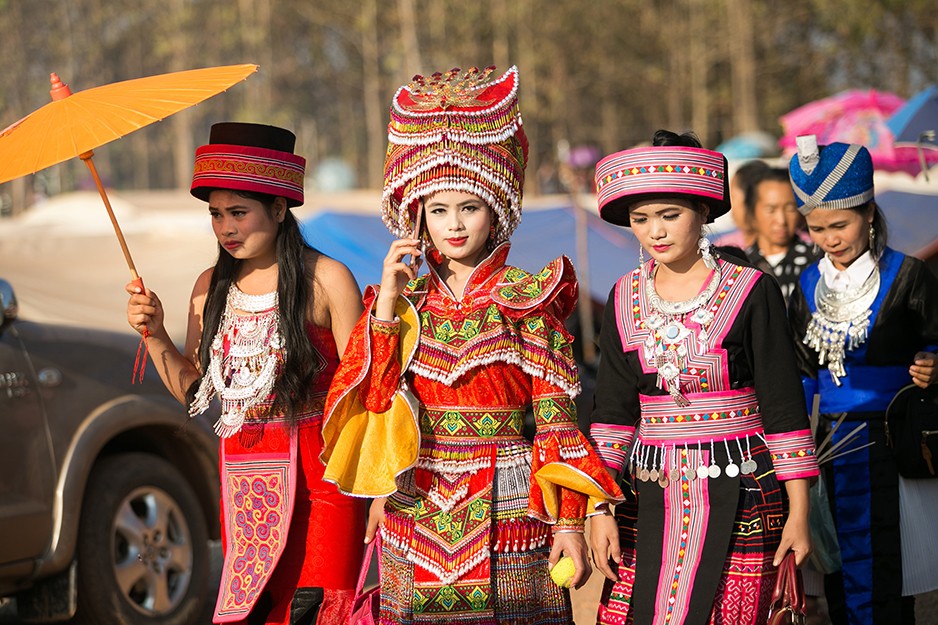
One of the most striking aspects of the festival is the display of traditional Hmong clothing. Women and men wear elaborately embroidered outfits, often handmade in the months leading up to the New Year. (Hmong Studies Journal)
-
For women — pleated hemp skirts dyed with indigo or dark dyes, paired with embroidered tops, sashes, and silver jewelry or accessories. For men — jackets and trousers with decorative trims, belts, and traditional head wraps. (Bong Ha Giang hostel)
-
The textiles and patterns (often called “paj ntaub” — “flower cloth”) are deeply symbolic: motifs can represent fertility, protection, lineage, prosperity, and identity. Wearing such attire during New Year is both a celebration and a proud display of Hmong heritage. (Learn Uake)
💞 Courtship, Community & Social Traditions
-
Pov Pob — the ball‑tossing game: Perhaps the most iconic public tradition during Hmong New Year. Young men and women line up across from each other and toss a small cloth (or sometimes tennis) ball back and forth. This game serves as a socially accepted way for unmarried young people to meet, talk, and evaluate potential romantic partners. (Luang Prabang -)
-
The rules are quite structured: usually, girls and boys face each other; girls may toss with either gender, but boys typically don’t toss with boys. It’s also taboo to toss the ball to someone from the same clan. (Laos Guide 999)
-
If a player drops the ball, the tradition often involves a small “penalty” — giving a gift (like a cloth, accessory, or trinket) or singing a traditional song to the other player, signaling interest. This is reminiscent of a courtship ritual rather than a mere game. (Learn Uake)
-
Through this interaction, many young couples begin building relationships, some eventually marrying after the New Year celebrations — making New Year a culturally sanctioned “meet‑and‑mingle” period. (Hmong Studies Journal)
🎶 Music, Dance & Public Festivities
-
Music is central to the celebrations. A distinctive instrument is the Qeej (similar to a bamboo mouth‑organ or reed instrument). It’s often played during communal gatherings; skilled players may perform while dancing or even doing acrobatics — creating a blend of music, movement, and cultural storytelling. (Luang Prabang -)
-
Singing — often traditional folk songs or courting songs — and communal dances accompany the music. These performances reflect the oral history, values, and artistic heritage of the Hmong people. (Newspapers In Education)
-
Public celebrations may also include sport‑like games (e.g. top‑spinning, arrow shooting, tug‑of‑war), contests, and communal social events. In some regions, even more festive entertainments (appropriate to local traditions) may be part of the celebration. (champameuanglao.com)
🏘️ Village Gatherings & Large Festivals
-
While the heart of New Year remains in family homes and tight-knit communities, large public festivals are common — especially in towns or villages with many Hmong families. In places like Luang Prabang (Laos), Phonsavan, and other centers, celebrations may span multiple days, drawing people from surrounding areas. (Luang Prabang -)
-
Such festivals become opportunities not only for cultural preservation, but also for community unity, reunion of families from different villages, and social exchange among youth seeking mates. (Learn Uake)
Regional Variations & Contemporary Adaptations
Because the Hmong people are spread across many countries (Laos, Vietnam, Thailand, diaspora in Western countries), the way New Year is celebrated can vary — reflecting local context, migration history, and evolving traditions.
-
In rural villages, New Year tends to follow more traditional patterns: spiritual rituals, ancestral offerings, family‑centered celebrations, and strict observance of customs. (Hmong Studies Journal)
-
In towns or among Hmong diaspora communities abroad, New Year has adapted — celebrations may shorten in duration, and include more modern elements (e.g. contemporary music, parties, modern games), blending tradition with modern social norms. (minnpost.com)
-
Despite adaptation, many core traditions remain — clothing, music, courtship games (pov pob), and a spirit of community — though some customs (strict clan rules, spiritual rituals) might be relaxed or symbolic in modern settings. (Hmong Studies Journal)
This flexibility shows the resilience of Hmong culture: traditions can evolve without losing their meaning, allowing younger generations and diaspora communities to maintain a link to their roots.
Why Hmong New Year Matters — Cultural, Social, and Spiritual Value
-
Cultural preservation & identity: In a world of rapid change, Hmong New Year acts as an anchor — preserving traditional clothing arts, music (qeej), textile embroidery, language, and social customs that might otherwise fade.
-
Community cohesion & social bonds: It’s a time for families, clans, and villages to reunite, strengthen relationships across generations, pay respects to ancestors, and welcome the coming year together.
-
Youth social structure & courtship: For young Hmong people, New Year offers a socially accepted space to meet, talk, sing, and possibly form relationships — through games like pov pob and communal festivities — sustaining important social traditions.
-
Spiritual renewal & gratitude: The rituals — offerings, soul‑calling, cleansing — reflect a worldview grounded in respect for ancestors, the spiritual world, and nature; New Year becomes more than a party — it’s a ritual act of continuity, gratitude, and hope for prosperity.
For outsiders and travelers, Hmong New Year offers a rare and authentic glimpse into the values, history, and vibrant living culture of the Hmong community — an opportunity to witness traditions that have endured centuries and to appreciate cultural diversity.
Visiting or Observing Hmong New Year: What to Know
If you are planning to observe or participate (as a respectful guest or traveler), here are a few tips:
-
Dress respectfully. If wearing traditional clothing or asking to take photos — do so respectfully, and ask permission where appropriate. Many outfits are handmade and hold cultural value.
-
Respect customs. Know some taboos — e.g. in traditional pov pob, it’s taboo to toss the ball to someone of the same clan. Understand that rituals (offerings, cleansing, ancestral respect) may be private or sacred.
-
Be open to learning. Ask politely about meanings behind songs, dances, textiles, and rituals — many Hmong are proud to share their heritage and welcome respectful interest.
-
Value authenticity over entertainment. While celebrations can be festive, focus on understanding cultural significance, not just tourism or spectacle.
-
Be mindful as a stranger. If you attend public events — be aware of local norms (behavior, photography, gift‑giving), and always act with respect for people’s privacy and traditions.
Final Thoughts
Hmong New Year is a remarkable living tradition — a festival rooted in agrarian life, family, community, spirituality, and youthful social rites. It embodies the Hmong spirit of resilience, identity, and cultural continuity.
Whether through ancestral rituals, vibrant clothing, melodic qeej music, or the playful toss of a cloth ball in the hopes of meeting someone special — Hmong New Year is more than a date on the calendar. It is a communal heartbeat that beats across generations and geographies.
For anyone wanting to understand the Hmong people — their history, values, artistry, and social bonds — New Year is the perfect moment.
#HmongNewYear #LuangPrabang #LaosCulture #CulturalTravel #EthnicFestival #TravelLaos #HmongTraditions #CulturalExperience #HmongFestival #LaosAdventures #VisitLaos #AsiaTravel #TraditionalCulture #HmongHeritage #LaosTourism #FestivalTravel #HmongMusic #HmongDance #CulturalTour #LaosTrip #EthnicCulture #HmongClothing #PovPob #LaosFestivals #HeritageTravel #TravelAsia #HmongLife #LaosExperience #LocalCultureLaos #HmongCommunity


0 comments